The problem it solves
Picture a property with two hundred investors, each owning a different fraction. The building generates rent every month. Splitting that rent by hand — calculating everyone's percentage, making two hundred transfers, keeping the record, fixing errors — is slow, expensive and error-prone. And the smaller the ticket and the larger the investor base, the worse it gets. Manual distribution is exactly the bottleneck that makes the fractional retail model unviable.
This is where the smart contract does its best work.
How the split works
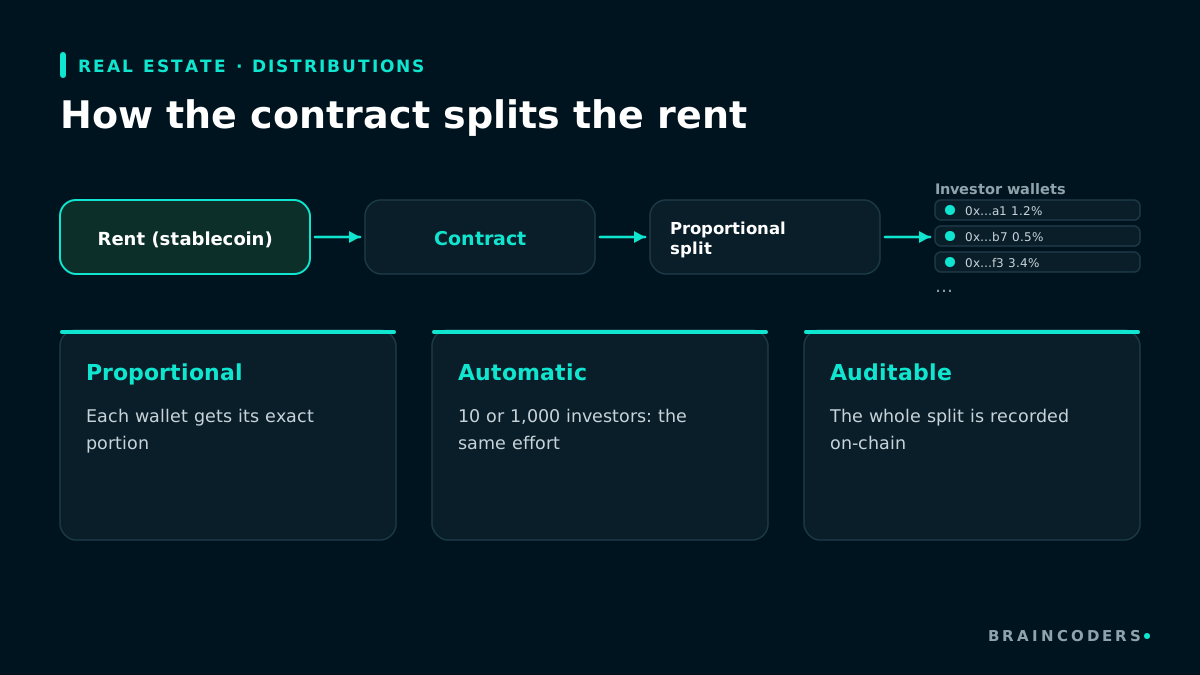
The contract already knows, at every moment, how many tokens each wallet holds — that's the information that lives on-chain. So the flow is direct: when an amount comes in to distribute, the contract splits it in exact proportion to each holder's stake, and deposits it into each investor's wallet. Two hundred payments, or two thousand, happen in the same operation, with no one calculating or executing them by hand.
Three properties make the difference against traditional distribution:
Proportional. Each wallet receives exactly what it's owed by its portion, calculated by the contract and not by a spreadsheet. If you hold 0.5% of the tokens, you receive 0.5% of what's distributed.
Automatic. There's no person making transfers one by one. The distribution is triggered and the split executes. The cost of splitting among 10 or among 1,000 investors is practically the same operational effort.
Auditable. The entire split is recorded on-chain. Any investor can verify they received the right amount and that the total adds up. You don't have to trust the administrator's word: it's on the chain, in plain sight.
The cap table as the source of truth
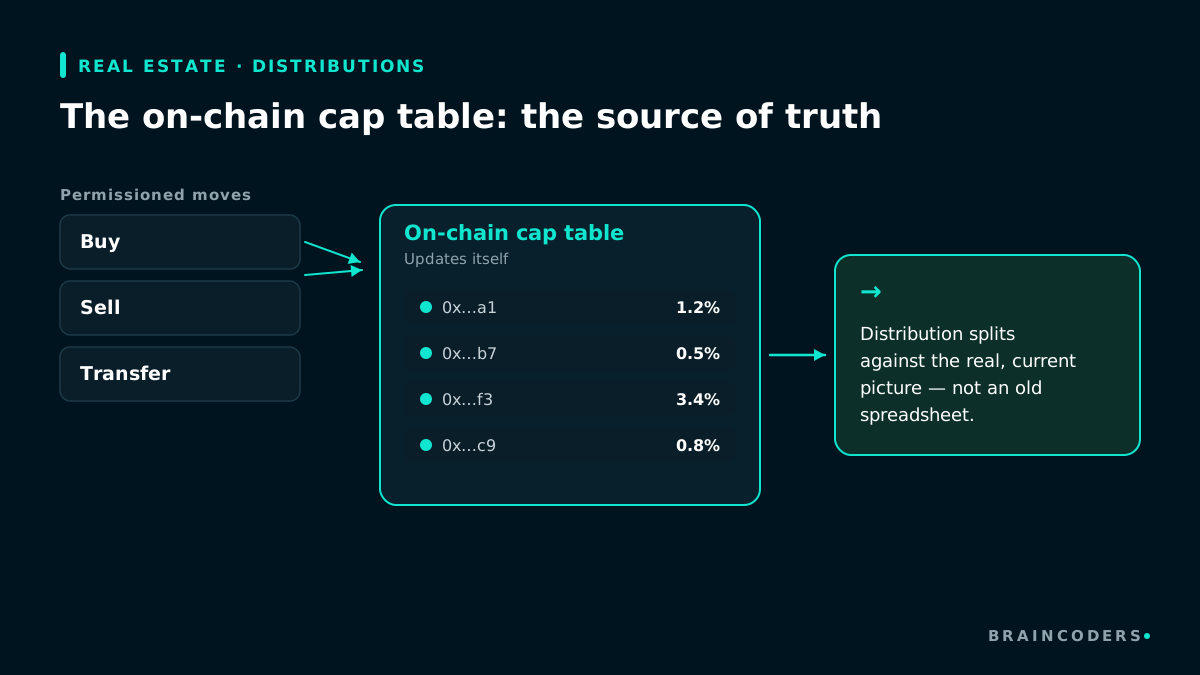
All of this rests on something tokenization sorts out from the start: the on-chain cap table, the record of who owns which portion. In the traditional world that record lives in spreadsheets someone updates by hand and that are rarely in sync. On-chain, the cap table is the state of the tokens: when someone buys, sells or transfers (within the permissioned rules), the record updates itself. The distribution always splits against the real, current picture of ownership, not against an outdated spreadsheet. And the investor sees all of this in a dashboard: their portion, their received distributions, their history — reporting without asking for it.
What automation does NOT solve (and it must be said)
It would be dishonest to sell this as magic. The contract splits the money that's already on-chain flawlessly; it doesn't generate that money or collect it for you. Two things still live in the real world:
The rent has to be collected and brought on-chain. The tenant pays in the physical world; someone has to receive that income, convert it to stablecoin and deposit it into the contract so it can be distributed. That fiat↔crypto bridge — and who operates it — is part of the design, not a detail.
What can be distributed is defined by the legal structure. Whether what's paid out is rent, dividend or return of capital, and with what treatment, is determined by the SPV and the securities lawyer — not the contract. The contract executes the rule; it doesn't decide what the rule is.
Put differently: automation removes the operational work and the margin of error from the split, which is already enormous. But the source of the income and the legal structure that allows it remain the client's and their specialists'. Braincoders builds the distribution engine, the on-chain cap table and the dashboard; the actual rent and its legal framework are supplied by the project.
Want to see how your project's distributions would be automated? Book a discovery call and we'll design it around your case.