Here's the conclusion up front: we certify nothing. A specialist signs the certification. What we do is connect to whatever gets certified and take it on-chain in a verifiable way. But to design that connection well, you and we need to speak the same language.
What NI 43-101 is (and why it exists)
NI 43-101 is a Canadian standard for disclosing mining information. Its purpose is simple and deep: to stop anyone from claiming they have "millions in ore" without an independent professional backing it with method. It's not alone; it belongs to an international family of equivalent standards under the CRIRSCO umbrella — JORC (Australia), S-K 1300 (USA), SAMREC (South Africa), PERC (Europe). All share the same logic of increasing certainty.
The core idea to take away is this: not all the ore that exists counts the same. The standard classifies what's underground by how much certainty you have that it's really there, and then by how much of it is genuinely extractable and profitable. Those are two different steps, and confusing them is the sector's most expensive mistake.
From resource to reserve: the ladder of certainty
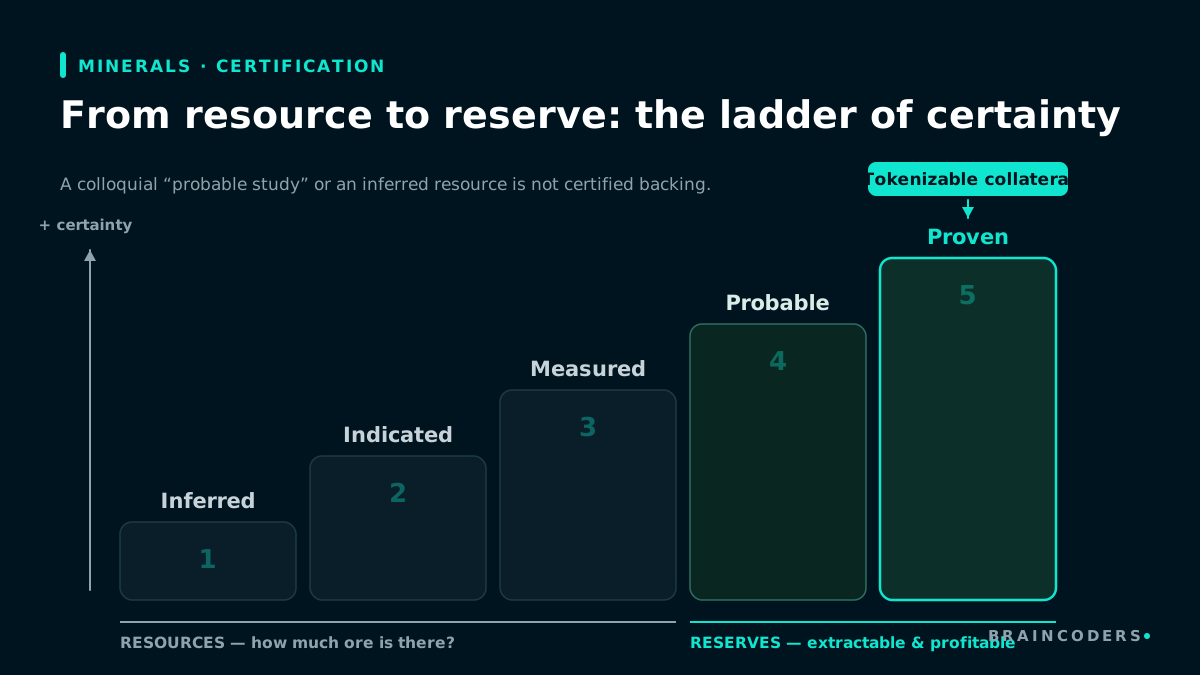
The first stretch of the ladder is resources — what's estimated to be there — and it climbs through three levels of confidence:
An inferred resource is the lowest rung: estimated from limited evidence — few drill holes, geological extrapolation. It's an informed hypothesis, not a measurement. An indicated resource has enough sampling to estimate quantity and quality with reasonable confidence. A measured resource is the highest level of certainty about existence: enough data density to know precisely how much ore there is and at what grade.
But knowing the ore exists isn't enough to back a token. The economic question is still missing: can it be extracted, and does extracting it leave a profit? That's where the second stretch begins — reserves — which applies real mining, processing, cost, price and permitting factors to measured and indicated resources:
A probable reserve is economically extractable with a reasonable degree of confidence. A proven reserve is the highest rung of all: certainty both that the ore is there and that it's extractable and profitable, supported by a feasibility study.
Only when you cross into a proven reserve — or, depending on how counsel structures it, at least a probable one — do you have something that deserves to be called collateral. A "probable study" in the colloquial sense, or a merely inferred resource, is not certified backing. That's the mistake that sinks projects: tokenizing on a rung that can't yet bear the weight.
Who signs it, and why you can't sign it yourself
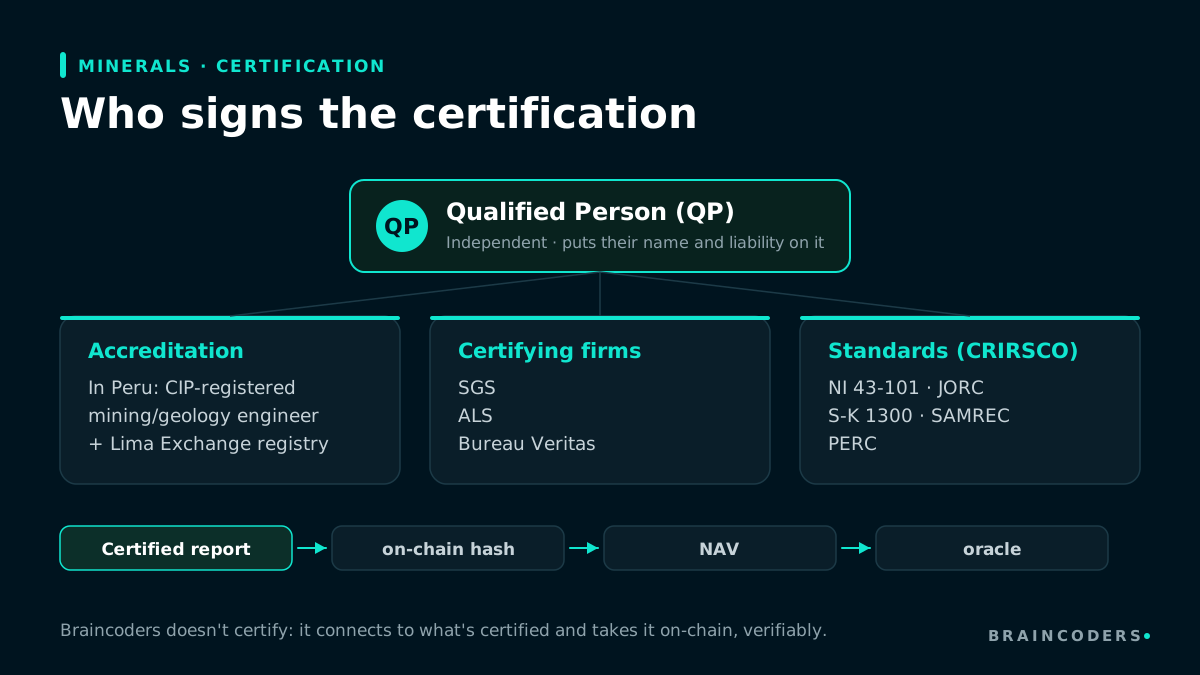
The certification isn't worth the paper; it's worth who signs it. The standard requires a Qualified Person: an independent professional, with verifiable credentials and relevant experience, who measures, evaluates and puts their name and professional liability on the statement. In Peru, that figure must be a mining or geology engineer registered with the CIP, with several years of experience and, for securities-market purposes, listed in the relevant registry of the Lima Stock Exchange.
In practice, the measurement and certification are carried out by specialized firms such as SGS, ALS or Bureau Veritas. Their independence is the whole point: if the party declaring the reserves is the same one who benefits from inflating them, the certification is worthless. Independence is what an investor — and a regulator — will look at first.
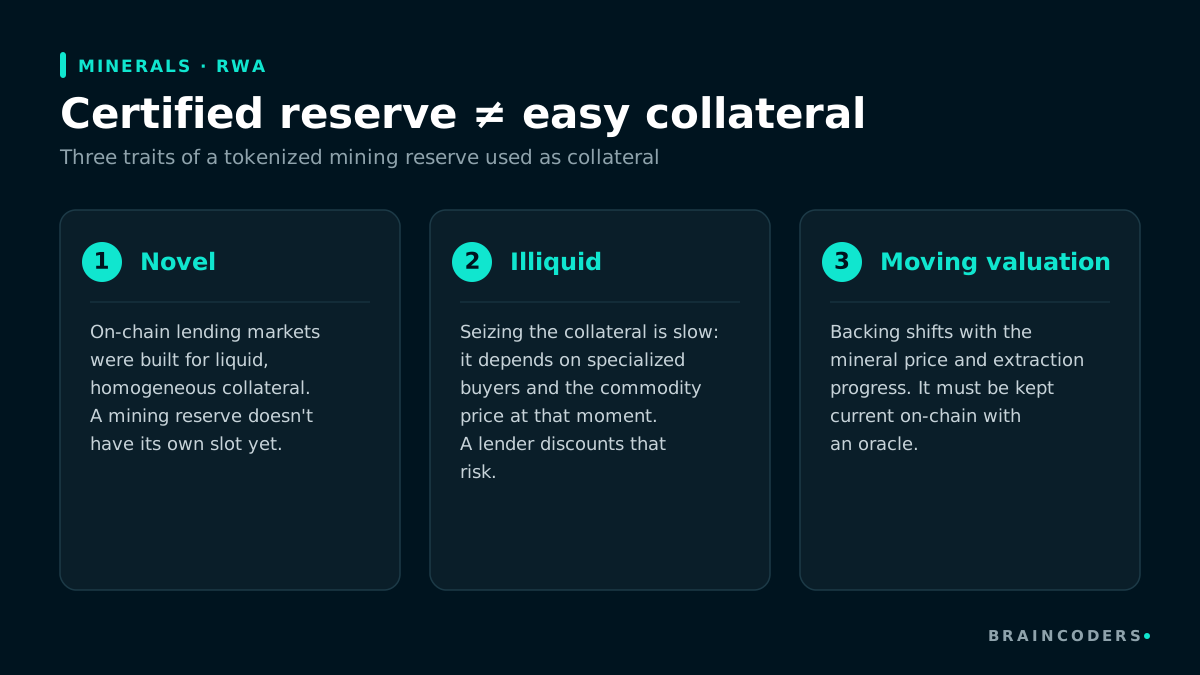
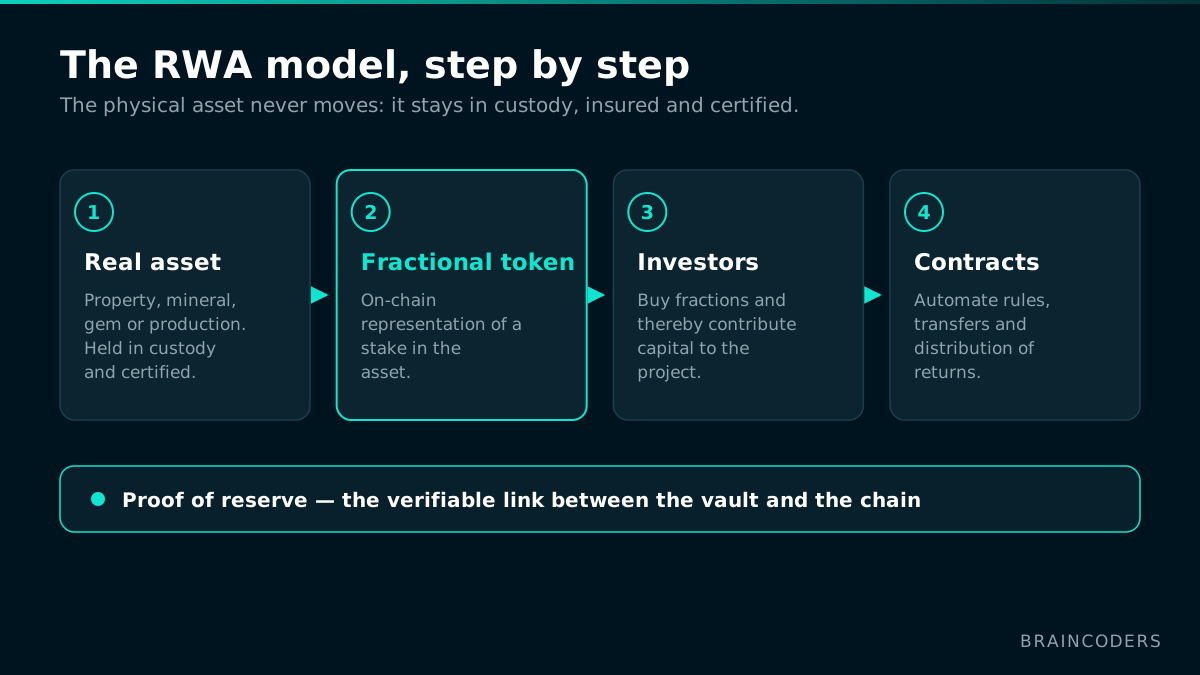
This is where we come in, and where our scope ends. Braincoders does not certify reserves or replace the Qualified Person. What we build is the technical bridge: we take the already-certified report, anchor its evidence on-chain with a verifiable hash, translate the reserve into a value (NAV), and keep it current through an oracle. That pipeline — from certificate to verifiable on-chain data — is the most novel and difficult piece, and it's where our value sits. The geological and economic certainty comes from the specialist; we make it verifiable, valuable and usable on-chain.
Why this orders the project instead of stalling it
Certification might look like a wall before you can start. It isn't. You can design the architecture, and even build and test the entire flow on testnet, while certification advances in parallel. What certification gates is a single jump: going live on mainnet in front of investors. That jump is conditioned — always — on current certification of the backing and a written legal opinion.
Seen this way, NI 43-101 isn't bureaucracy: it's what turns your word into a verifiable fact, and without that fact there's nothing honest to tokenize. The standard works in your favor — it's the difference between asking someone to believe you and being able to show them why they should.
In short
Resource and reserve are not synonyms: one says how much ore there is, the other how much of it is genuinely extractable and profitable. The ladder climbs from inferred to indicated to measured, and from probable to proven reserve, and only near the top do you have tokenizable collateral. An independent Qualified Person signs it — not you, and not us. And that certified document is exactly the starting point from which we can build the on-chain layer.
Is your reserve already certified, or do you want to understand what's left to get there? Book a discovery call and let's review it together.