We'd rather you hear it from us than from an investor who walks away, or a lending module that rejects your token. Early honesty is cheaper than a late surprise.
First truth: a "probable study" is not a certified reserve
This is the most expensive misunderstanding. A deposit with a "probable study" — or promising samples, or an optimistic internal report — has nothing verifiable yet to back a token. International standards (NI 43-101, JORC, and the rest of the CRIRSCO family) exist precisely to separate hope from certainty, and they draw a hard line between a resource and a reserve.
Only a proven reserve — measured, extractable and economic, with a feasibility study and signed by a Qualified Person — is credible backing. The jump from "I think there's ore" to "it is certified that there is X, it is extractable and profitable" is exactly what gives the token substance. Without that jump, tokenizing is just putting blockchain on a promise.
That's why our rule is non-negotiable: no mainnet deployment without a written legal opinion and third-party certification of the backing. We don't certify — a specialist executes that: an accredited Qualified Person, through firms like SGS, ALS or Bureau Veritas — we connect to whatever they certify and take it on-chain.
Second truth: it's novel and illiquid collateral
Suppose you already have the proven, certified reserve in custody. Great. Even so, as collateral, a tokenized mining reserve has three characteristics worth facing head-on.
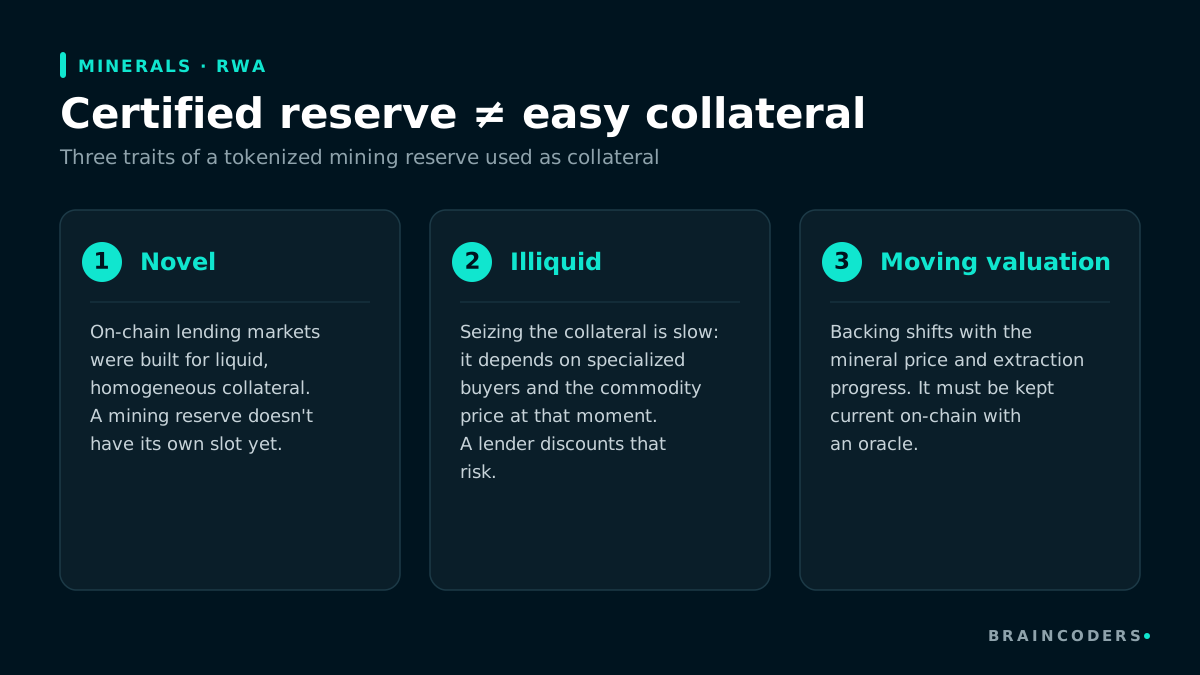
It's novel. On-chain institutional lending markets were designed around liquid, homogeneous collateral — tokenized treasuries, stablecoins, assets with a continuous market price. A copper or gold reserve underground in Peru doesn't fit that box yet. Not because it lacks value, but because no one has written the risk parameters for that kind of asset.
It's illiquid. If the loan defaults and the collateral has to be seized, you don't sell a mining reserve in an afternoon. Liquidation is slow, depends on specialized buyers and on the commodity price at that moment. A serious lender discounts that risk before accepting the collateral.
Its valuation moves. The backing value depends on the mineral price, on extraction progress, and on the certification staying current. It's not a fixed number: it's a data point that has to be kept up to date on-chain with an oracle and a trustworthy attestation source.
None of this invalidates the model. What it does is set realistic expectations about who will accept that collateral and under what conditions — and that's exactly where many projects crash, because they never had the conversation up front.
The honest plan B: don't depend on a door that may not open
Here's the part almost no one tells you. The large institutional lending venues — the most-cited example is Aave Horizon — today prioritize liquid RWAs, and onboarding a new asset goes through risk diligence and governance. Whether they accept a Peruvian mining reserve in the short term is, honestly, unlikely.
Designing your entire architecture assuming that door will open is betting the project on a decision you don't control. So, when the case calls for it, we design an in-house lending module, connected to a local capital provider, instead of depending on the external institutional venue.
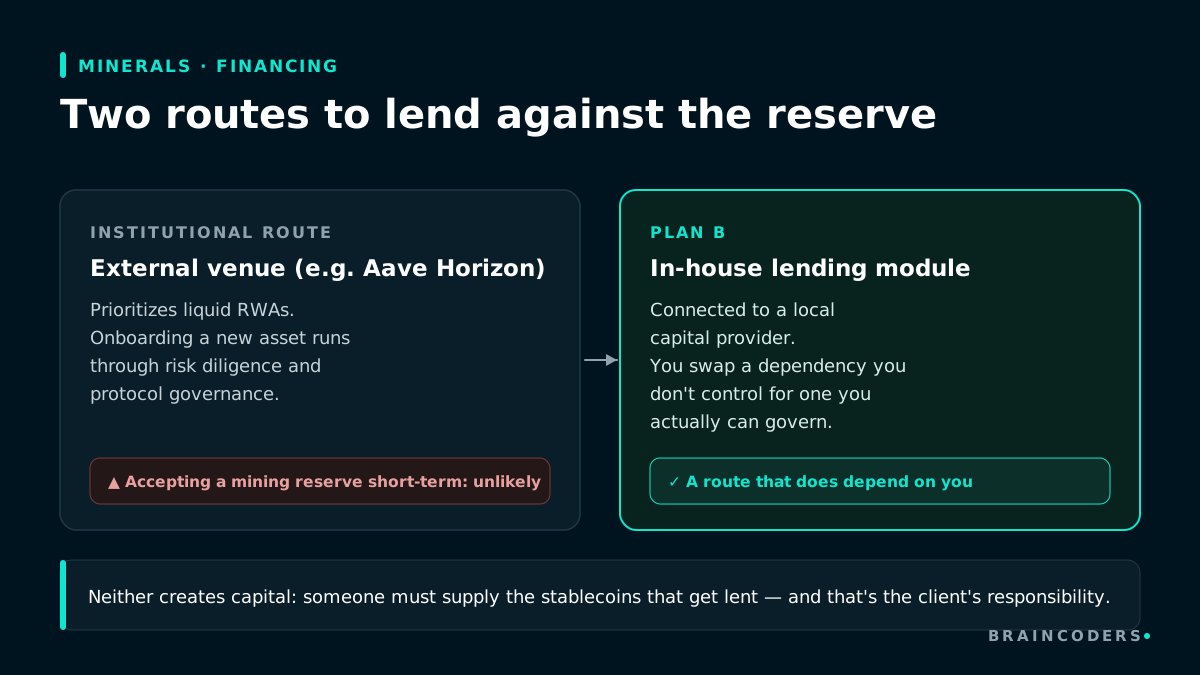
This swaps a critical dependency for one you can actually govern. But it doesn't solve the make-or-break piece: tokenizing does not create capital. Someone has to supply the stablecoins that get lent. If it isn't foreign capital, it comes from a local provider, and securing it is the client's responsibility, not the technology's. A perfect lending module with no one funding it is an engine with no fuel.
What's yours and what's ours
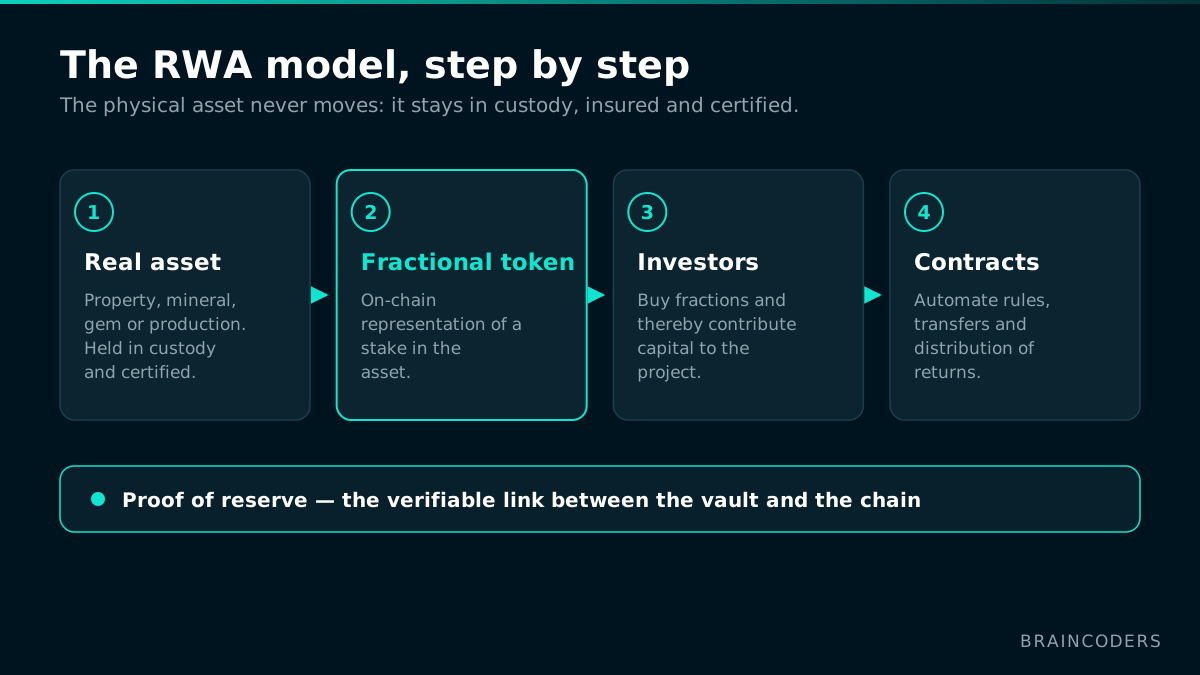
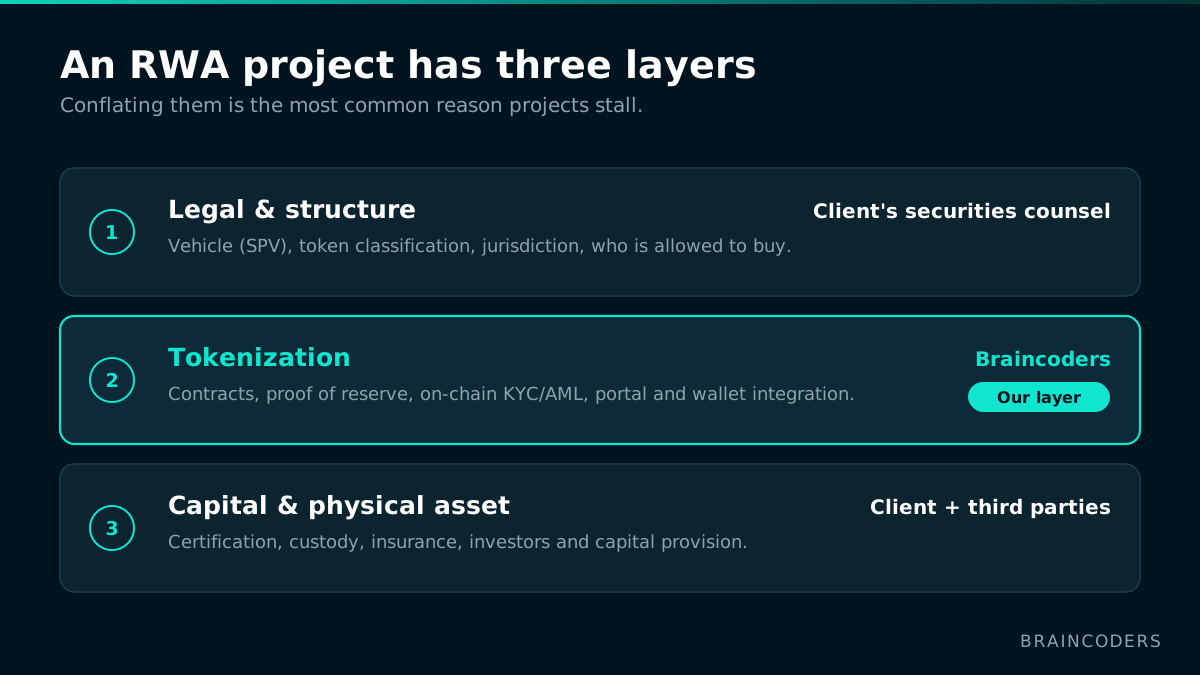
So there are no grey zones: certifying the reserve, structuring the offering legally, custody of the mineral and the capital that gets lent are the client's, with their specialists. We are the technology layer: the permissioned token contracts, the proof of reserve, the pipeline that translates the certified report into an on-chain value, the lending module when it applies, and the portal. That split isn't modesty; it's what keeps the project orderly and each party accountable for their own part.
One piece of context that is also honesty: today our minerals work centers on metallic and non-metallic reserves. We haven't taken on gemstone or other commodity projects yet, and we won't present as a closed case something that isn't one.
In short
A mining reserve can be excellent tokenized collateral — but only when it's certified as a proven reserve, when you accept that it's illiquid and novel, and when you have a financing plan that doesn't depend on an institutional door that may not open. If you have the reserve and want to know whether the case holds up, that's exactly the conversation of a discovery call.
Have a reserve and want to know whether it qualifies as tokenizable collateral? Book a discovery call and we'll assess it with rigor.