An RWA project has three layers, not one
When someone says "I want to tokenize my asset," they're actually describing three distinct projects that must advance in parallel:
| Layer | Who owns it | What it defines |
|---|---|---|
| 1. Legal & structure | Client's securities counsel | Vehicle (SPV), token classification, jurisdiction, who can buy |
| 2. Tokenization | Braincoders | Contracts, proof of reserve, on-chain KYC/AML, portal, wallets |
| 3. Capital & physical asset | Client + third parties | Certification, custody, insurance, investors |
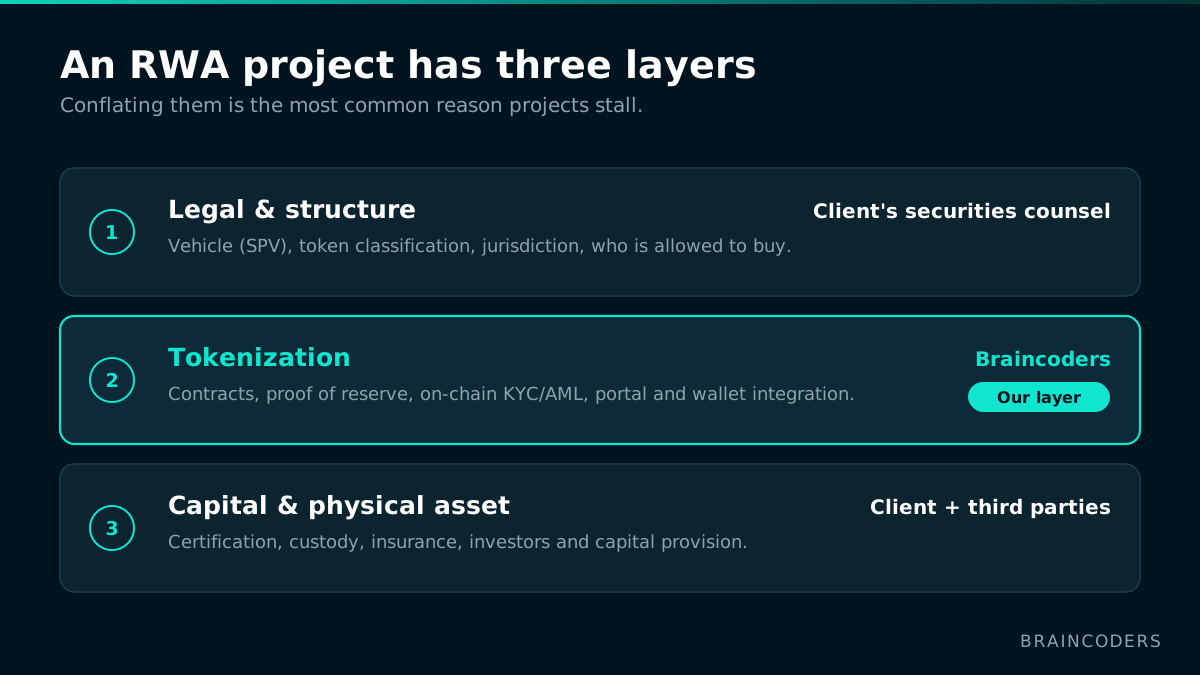
Conflating these layers is the single most common reason projects stall. A technical vendor promising to solve the legal layer is promising something they cannot stand behind.
The responsibility table
| Area | Braincoders | Client + specialists |
|---|---|---|
| Legal and regulatory structure | — | Securities counsel, jurisdiction, T&C |
| Token classification (security / utility) | Technical implementation of what's defined | Legal determination |
| KYC / AML | Provider integration in the portal | Compliance program and vendor contract |
| Physical custody, insurance, certification | On-chain registry + proof of reserve | Vault, insurer, lab, certifier |
| Smart contracts and portal | Design, development, testing, deployment | Requirements approval |
| Security audit | Coordination and remediation | Contracting and paying the audit firm |
| Capital raising | — | Fundraising, investors, treasury |
Why we don't audit our own code
The security audit is contracted and paid for by the client, with an independent firm. Not because we couldn't do it, but because an audit performed by whoever wrote the code carries no credibility with a serious investor. It's a basic control principle, not a technical limitation.
The mainnet gate
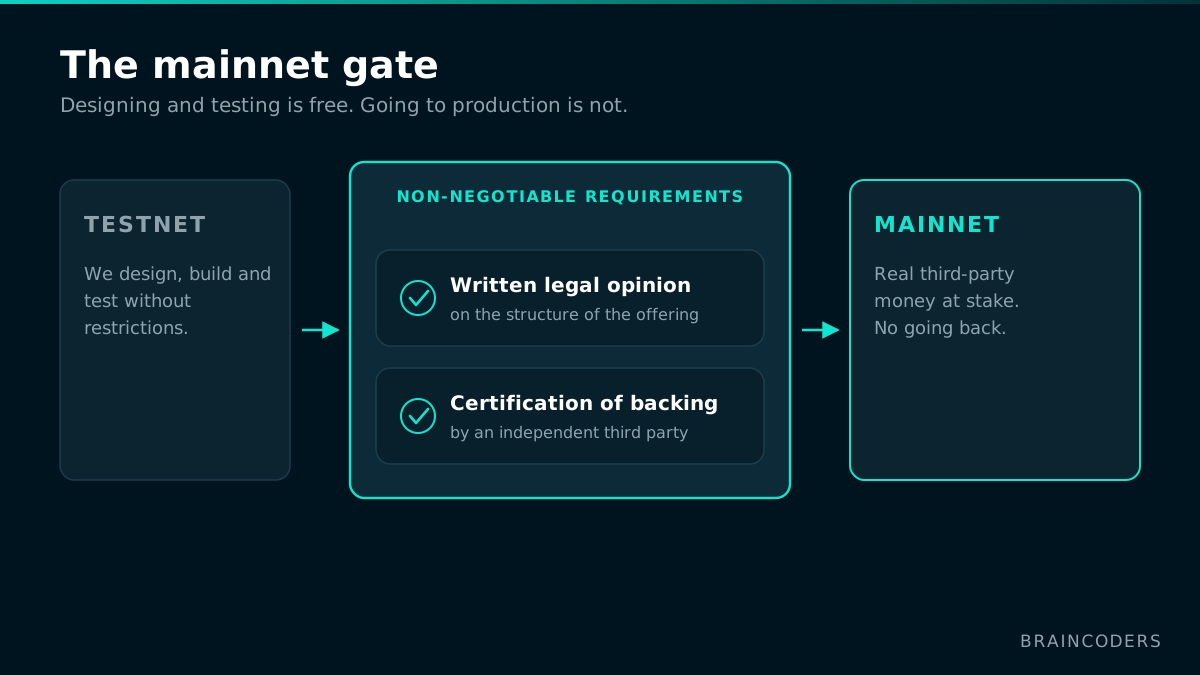
We have one rule we don't negotiate: we don't deploy to production without two things.
- Written legal opinion on the structure of the offering.
- Third-party certification of the backing asset.
We can design, build and test on testnet without them. But the jump to mainnet — where third-party money is at stake — requires both. This rule has frustrated the occasional client in a hurry, and in every case it ended up protecting them.
Why this discipline is in your interest
It might seem that a vendor who "does everything" makes your life simpler. In practice, the opposite happens:
- A vendor promising to solve the legal layer is exposing you to regulatory risk with backing they can't provide.
- A vendor who doesn't distinguish the layers won't flag a fundamental flaw in your token model, because they won't see it either.
- A vendor with no gates deploys when you pay, not when the project is ready.
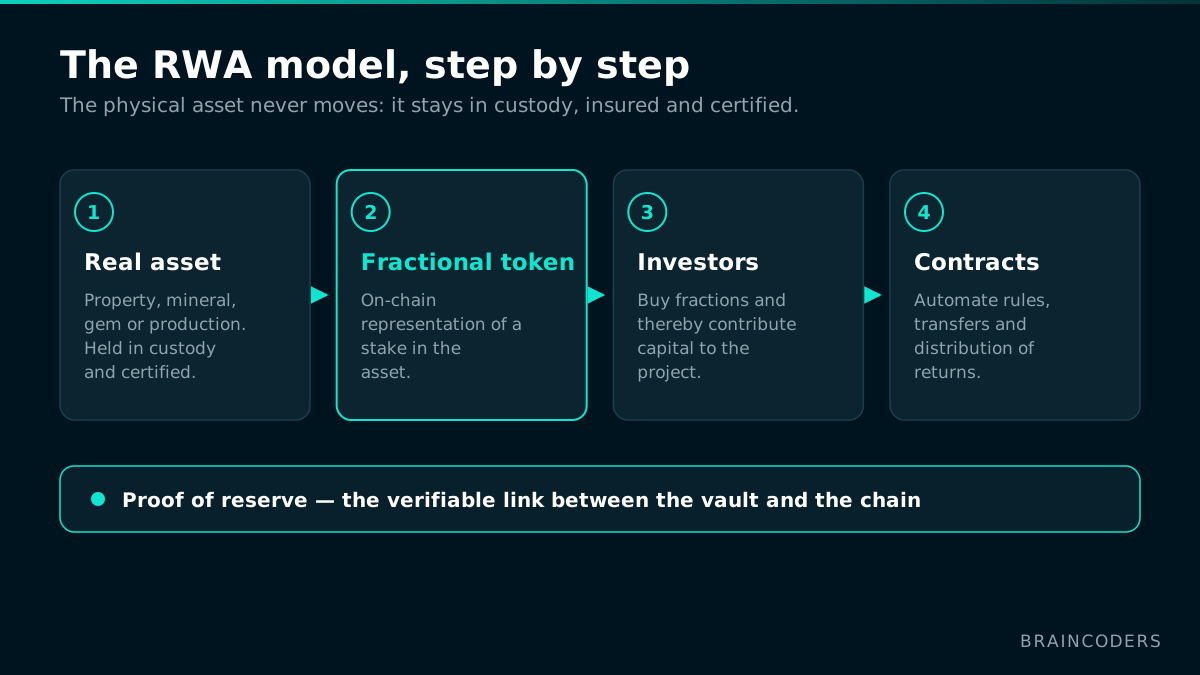
Our internal shorthand says it best: a specialist executes that; we connect to what they certify and take it on-chain.
So what we do build
We're the technology layer, and there we go deep: design and development of permissioned contracts (ERC-3643 and similar), on-chain compliance with KYC and whitelists, proof of reserve wired to oracles, investor and admin portals, stablecoin payments, and multi-chain deployment.
We work in independent phases, starting with a fixed-price Discovery that delivers the architecture, the token model and a firm estimate for the rest. That way you know exactly what you're getting into before committing serious budget.
Does your project have all three layers covered? Book a call and let's review it.