The four criteria that actually matter
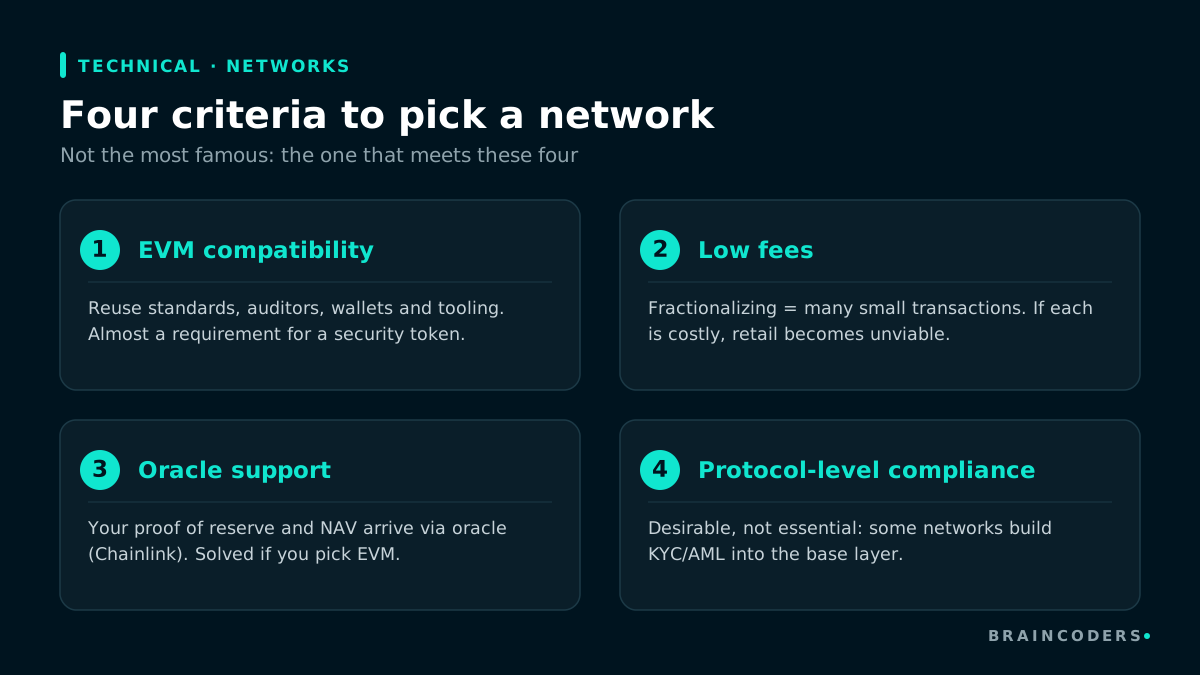
EVM compatibility. The Ethereum Virtual Machine is the de facto standard. Choosing an EVM network lets you reuse the token standards (ERC-3643, ERC-20), the auditors who already know that environment, the wallets, the libraries and the tooling. Leaving the EVM world — for Solana or Stellar, say — can have specific upsides, but you lose that entire ecosystem and make every step more expensive. For a security token, EVM compatibility is almost a requirement.
Low fees. This is the most underrated criterion, and for RWA it's decisive. Fractionalizing an asset means many small transactions: hundreds of purchases, transfers, rent distributions, proof-of-reserve updates. If each one is expensive, the model becomes unviable for retail tickets. A network where a transfer costs cents is the difference between a usable product and one that eats the return in fees.
Oracle support. Your proof of reserve and your value (NAV) reach on-chain through an oracle — usually Chainlink. The network you choose must have that support available. The good news is that Chainlink runs on EVM, so in practice this resolves itself if you met the first criterion.
Protocol-level compliance (desirable). Some newer networks build KYC/AML into the base layer itself. It's not essential — ERC-3643 already gives you token-level compliance — but where it exists, it adds up.
The comparison
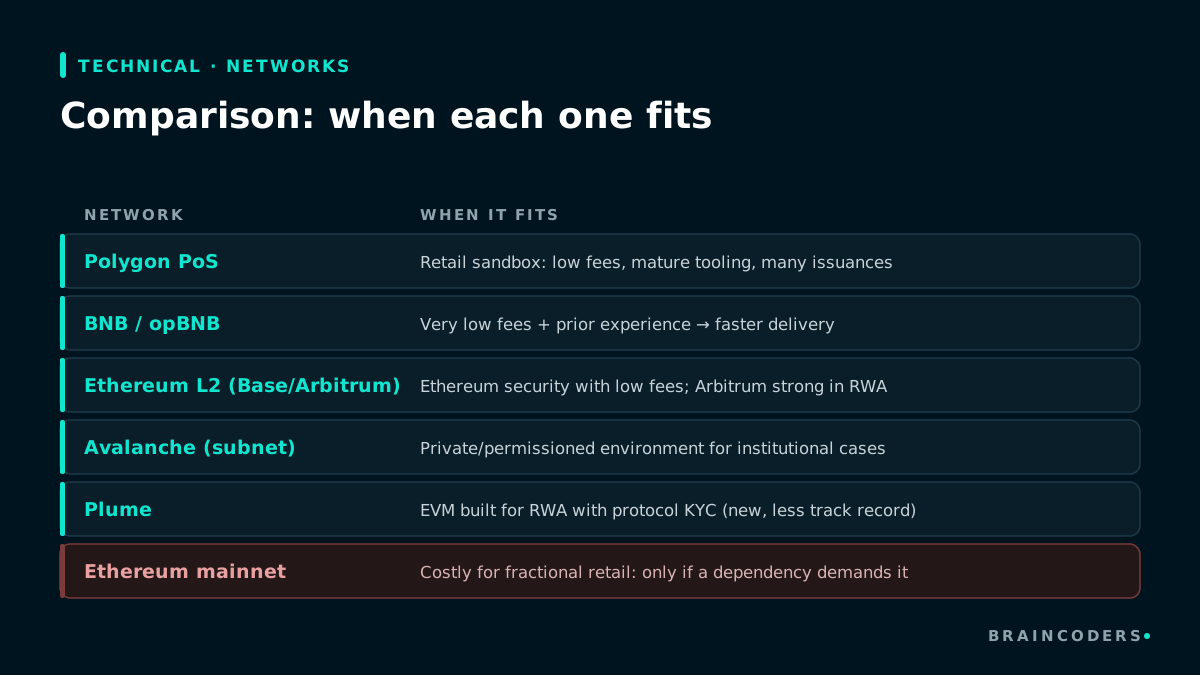
With those criteria, here's how the options we usually evaluate stack up:
Polygon PoS is the RWA "retail sandbox": low fees, mature tooling, built for many small issuances. It's often the default starting point for an MVP.
BNB Chain / opBNB offers very low fees and, in our case, prior experience that speeds up delivery. opBNB pushes costs even lower. A good option when time-to-launch matters.
Ethereum L2 (Base, Arbitrum) gives you the security of the Ethereum ecosystem with low fees. Arbitrum has strong traction in RWA trading; Base comes with solid backing and growing adoption. A good balance of seriousness and cost.
Avalanche (subnet) shines when you need a private or permissioned environment at the network level, typical of institutional cases that want their own controlled space.
Plume is an EVM network built specifically for RWA, with protocol-level KYC/AML. It's the most specialized bet — and also the newest, with less production track record, which is a risk factor to weigh on an asset that must last years.
Why Ethereum mainnet is usually a bad idea (for fractional retail)
Here's the counterintuitive part. Ethereum mainnet is the most secure, most liquid chain, and so many assume it's "the serious one." But for a fractional retail product — where the whole point is that many investors enter with small tickets and there's frequent movement — its fees make it counterproductive. If buying a USD 100 fraction costs USD 20 in gas, the product makes no sense. Ethereum mainnet is justified when the case demands it for a concrete dependency — for example, using an institutional lending venue that only lives there — not for prestige.
That nuance is everything: the network isn't chosen for reputation, it's chosen for the usage profile. High-ticket, low-frequency institutional collateral tolerates high fees; a fractionalized retail product does not.
Our default recommendation (confirmed in Discovery)
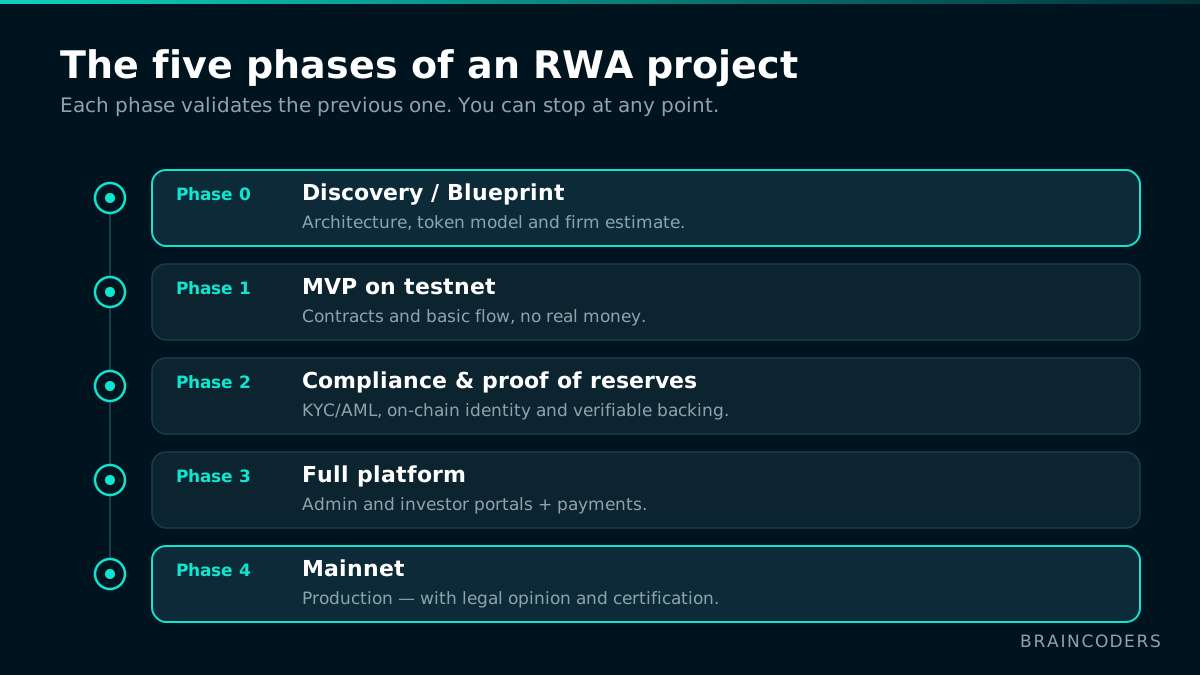
For most MVPs, we start on a low-cost EVM — Polygon or BNB — with Chainlink Proof of Reserve. It's cheap, mature and doesn't lock you in: because Chainlink is EVM-network-agnostic, migrating later is viable. But "default" isn't "always": the final choice depends on the token model, the jurisdiction and compliance, and those three are settled in Phase 0, not before. The network is a consequence of the design, not the starting point.
Want to define the right network for your specific case? Book a discovery call and we'll assess it against these criteria.