I'm writing this because we see it often, and because when we spot it in a client's document we flag it directly, without softening. We'd rather have an uncomfortable conversation early than a serious problem later.
What makes a DAO a DAO
"DAO" means Decentralized Autonomous Organization: an organization whose decisions are made collectively and bindingly by its members, usually through on-chain voting, and where the outcome of that vote is executed. The key word is binding. Not "advisory," not "to take the pulse," not "we listen and then we decide." Binding: if the proposal wins, it happens.
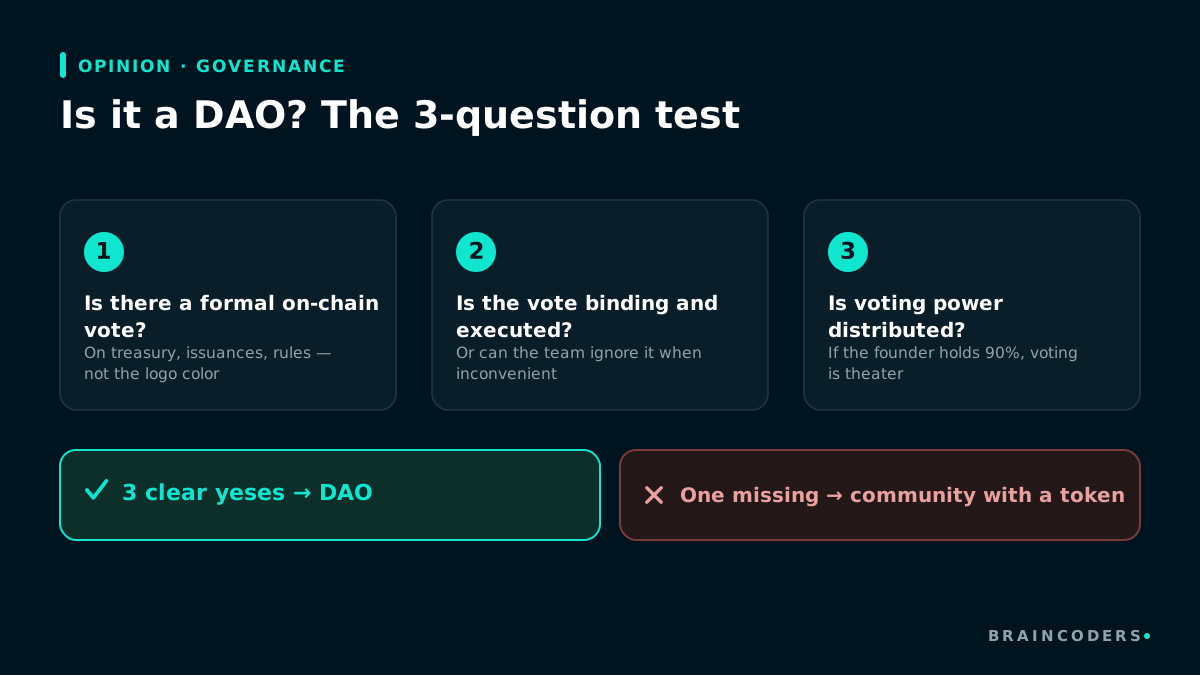
There's a simple three-question test to know whether what you have is a DAO or a community with a token:
Is there a formal, on-chain vote on decisions that matter? Not the logo color — the treasury, issuances, rule changes.
Is the vote's outcome binding and executed? Or can the team ignore it when it's inconvenient?
Is voting power actually distributed? If the founder controls 90% of the governance tokens, "voting" is theater: the outcome was already decided.
If those three aren't a clear yes, you have a community, a club, or a product with decentralization marketing — all of which can be perfectly legitimate. What you don't have is a DAO. And the problem isn't having that; the problem is calling it something other than what it is.
Why the label is a risk, not a detail
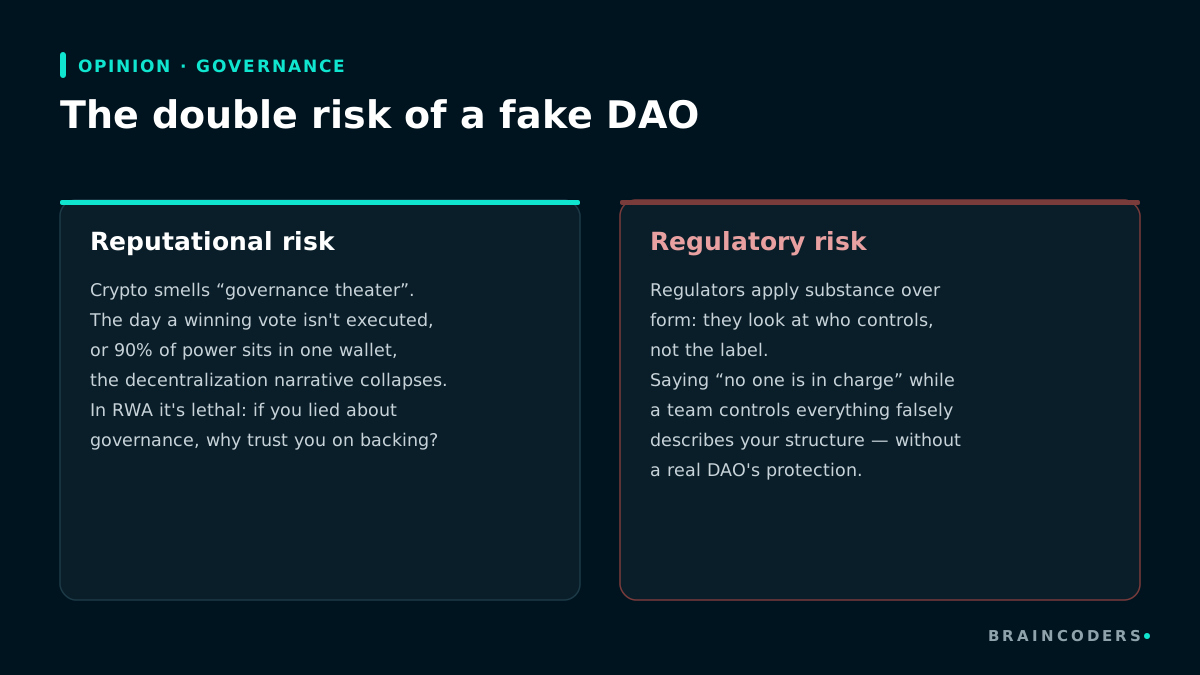
Calling something a "DAO" when it isn't exposes you on two flanks at once.
Reputational risk. The crypto world learned to smell "governance theater" from a distance. The day a holder asks "why wasn't this winning proposal executed?", or discovers that 90% of voting power sits in a single wallet, the decentralization narrative collapses — and with it the trust in everything else you promised. It's especially corrosive in an RWA project, where your entire asset is the credibility of the backing. If you lied about governance, why would they believe you about the reserves?
Regulatory risk. This is the expensive one. Real decentralization has concrete legal consequences: in some frameworks, who controls the decisions determines who answers for them. Saying "we're a DAO, it's decentralized, no one's in charge" when in fact an identifiable team controls everything is, to a regulator, a false description of your structure. And regulators apply substance over form: they look at who really controls, not the label. Presenting yourself as decentralized while operating centrally doesn't give you a DAO's protection and does add a misrepresentation problem.
What to do instead of pretending
The way out isn't to force a DAO you don't want or need. Most early-stage RWA projects shouldn't be DAOs: they need fast decisions, identifiable people responsible, and a clear legal structure — usually an SPV- or LLC-type vehicle with explicit governance. That's perfectly honest. Call things by their name: if the team decides, say so; if there's a board, name it; if later you want to migrate real power to holders, do it in stages and make each stage true.
If you genuinely want a DAO, then build a real one: binding on-chain voting, automatic execution of what's approved, and a power distribution that isn't a fiction. There are frameworks that recognize the figure — the DAO as a Wyoming LLC is the most-cited example — precisely because real decentralization needs a real legal wrapper.
Where we come in: Braincoders builds the technical governance layer — the voting contracts, the on-chain execution of what's approved — so that "binding" is a verifiable fact and not a promise. What we don't do is decide your legal structure or certify that you're a DAO; your lawyer defines that. Our part is making sure that, if you say the vote rules, the code makes it actually rule.
Does your governance model say what it actually does? Book a discovery call and we'll review it straight.